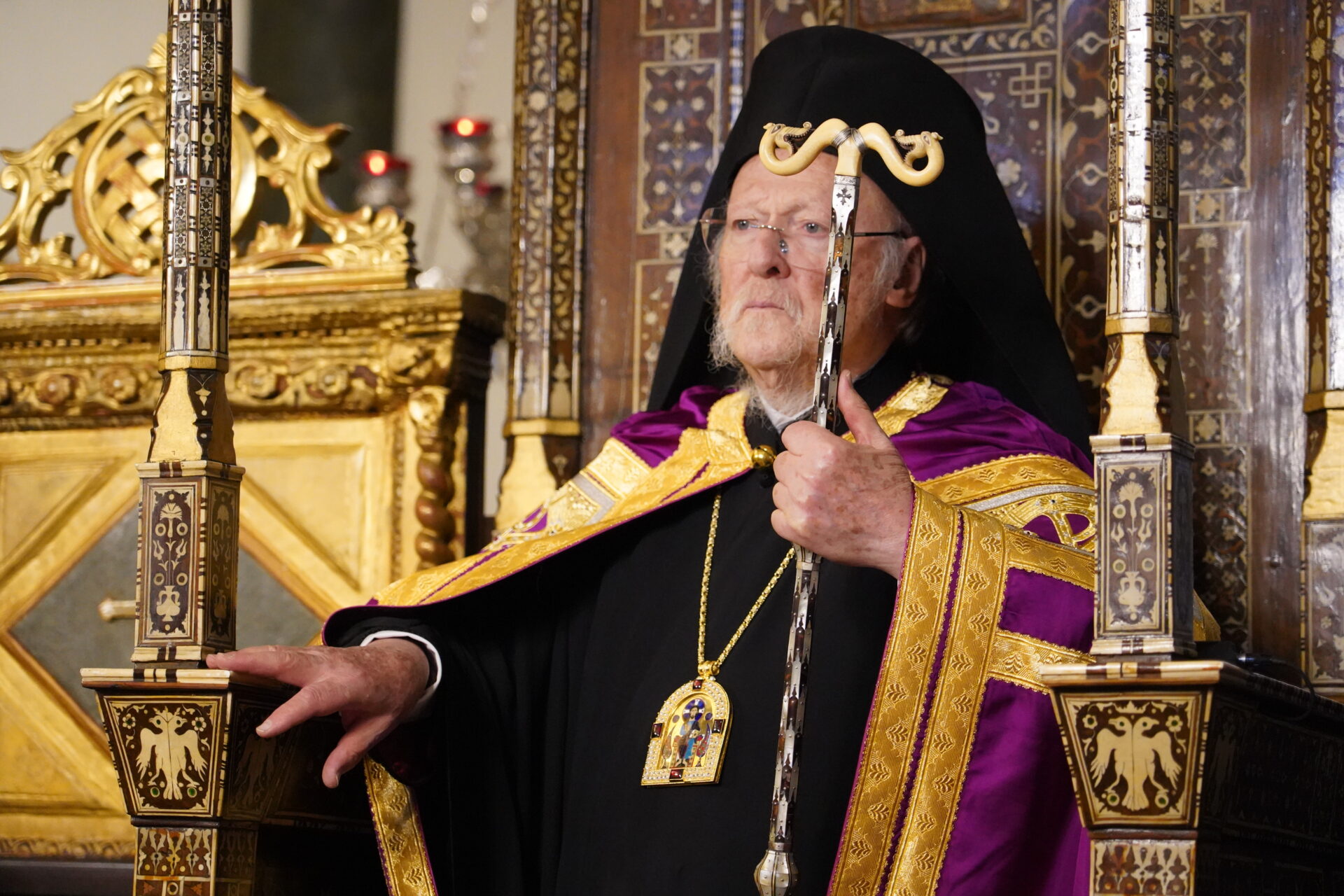
On March 27, 2026, His All-Holiness Ecumenical Patriarch Bartholomew and the Holy and Sacred Synod of the Ecumenical Patriarchate issued a Patriarchal and Synodal Encyclical “on the occasion of the celebration of the 1400th anniversary of the chanting of the Akathist Hymn for the deliverance of the Queen of Cities from the siege of the Avars and the Persians.” The Encyclical is a profound and moving reflection upon the sacred wisdom contained in this ancient and venerable hymn, which is such a central element of the Church’s worship during Holy and Great Lent.
His All-Holiness announced in his Patriarchal Encyclical for Christmas 2025 that “in 2026, the Holy Great Church of Christ will honor the completion of 1400 years since August 7, 626, when the Akathist Hymn was chanted ‘standing up’ during the Sacred Vigil in the Church of Panagia Blachernae, as an expression of gratitude to the All-Holy Mother of God, for the safeguarding of the City of Constantinople from the attack of hostile forces.”
The new Encyclical serves as a central element of this commemoration. The Ecumenical Patriarch continued: “On the occasion of this historic milestone, the 2026 Yearbook of the Ecumenical Patriarchate will be dedicated to the commemoration of this important event for our tradition and identity, which are inseparably and profoundly associated with the honor reserved for our ever-blessed and most pure Mother of God, the defender and protector of our people.”
The Encyclical calls the Akathist Hymn “a lofty and triumphant composition, which, with a unique richness of eloquence, refers both historically and theologically to the Incarnate Divine Economy and to the unique contribution of the All-Pure Mother of God therein.” It notes that “the repetition in this hymn of the word ‘Rejoice’ one hundred and forty-four times to the All-Blessed Virgin clearly bears a mystical meaning, referring to the one hundred and forty-four thousand pure saints of the Apocalypse, who sing the ‘new song’ before the Throne of God and ‘follow the Lamb wherever He goes.’”
Historically, the Akathist Hymn gives thanks to the Mother of God for “the deliverance of the City of Constantinople and of the entire Empire from the severe assault of the Avars and the Persians, while Emperor Heraclius was absent with the army, striving far away for the recovery of the Precious Cross of Christ.” For “the Mother of God not only strengthened the morale of the few defenders, but also wrought a great miracle: by the sudden turning of violent winds, she brought about the total destruction of the fleet of the besiegers, after which they fled in disorder, and thus the City was saved.”
As a result, the Akathist Hymn, “this resplendent masterpiece of ecclesiastical poetry, an incomparable monument of the Greek word and a most finely wrought creation of God-inspired theology, became the most beloved hymn of our liturgical life, the sweetest delight of Christians.” In recognition of its spiritual power, majesty and wisdom in extolling the intercession of the Theotokos, “it was translated long ago into many languages. Bishops and priests chant it with compunction. Monastics recite it daily, and the faithful frequently throughout the entire year. Theologians expound its lofty dogmatic ascents. Philologists and those of learning plunge into the beautiful depths of its expressive elegance and poetic grandeur. Poets and painters draw inspiration from its luminous lyrical expressions. Iconographers depict exquisite images drawn from its rich content. Masters of ecclesiastical music adorn it with elaborate sacred melodies.”
The universality of the love for the Akathist Hymn, among monastics, theologians, poets and iconographers alike, vividly illustrates the incomparable richness and multifaceted beauty of this unique treasure of the Church. The Encylical reminds us, however, that the Akathist Hymn “remains always a God-befitting prayer of the Church: the voice of the devout heart of Christians; at once doxology, thanksgiving, supplication, and entreaty to Him ‘who for us men and for our salvation came down from heaven and was incarnate of the Holy Spirit and the Virgin Mary and became man,’ and, at the same time, to her who possesses maternal boldness before God and who abundantly bestows, in many ways and manners, her mighty help and protection upon the pious race of the Orthodox.”
The Akathist Hymn, chanted so fittingly during Holy and Great Lent, also poses a challenge to all those who pray it: it “calls every faithful person to vigilance, to stand upright and steadfast, in humility and prayer, before the great challenges of our age, in these grievous days of many upheavals and wars through which humanity is now passing.”
We do so in the joyful hope that the Mother of God will once again act, as the Encyclical states, “as the ‘Champion General’ of all who are wronged and endangered, and as a mighty protection for the children of the Church throughout the world, granting to the human race the true peace, that peace ‘which surpasses all understanding,’ of her Son.” As it reminds us of Almighty God’s all-surpassing love for the human race, the Akathist Hymn reinforces this hope.