Many Orthodox Christians are aware that the Ecumenical Patriarch is “first among equals,” but all too many would find it difficult to explain what this actually means. This common designation is rooted in the Orthodox understanding of the nature of the Church, as well as of its unity and authority — an understanding that originated with the Holy Apostles themselves and is faithfully reflected in the Church to this day.
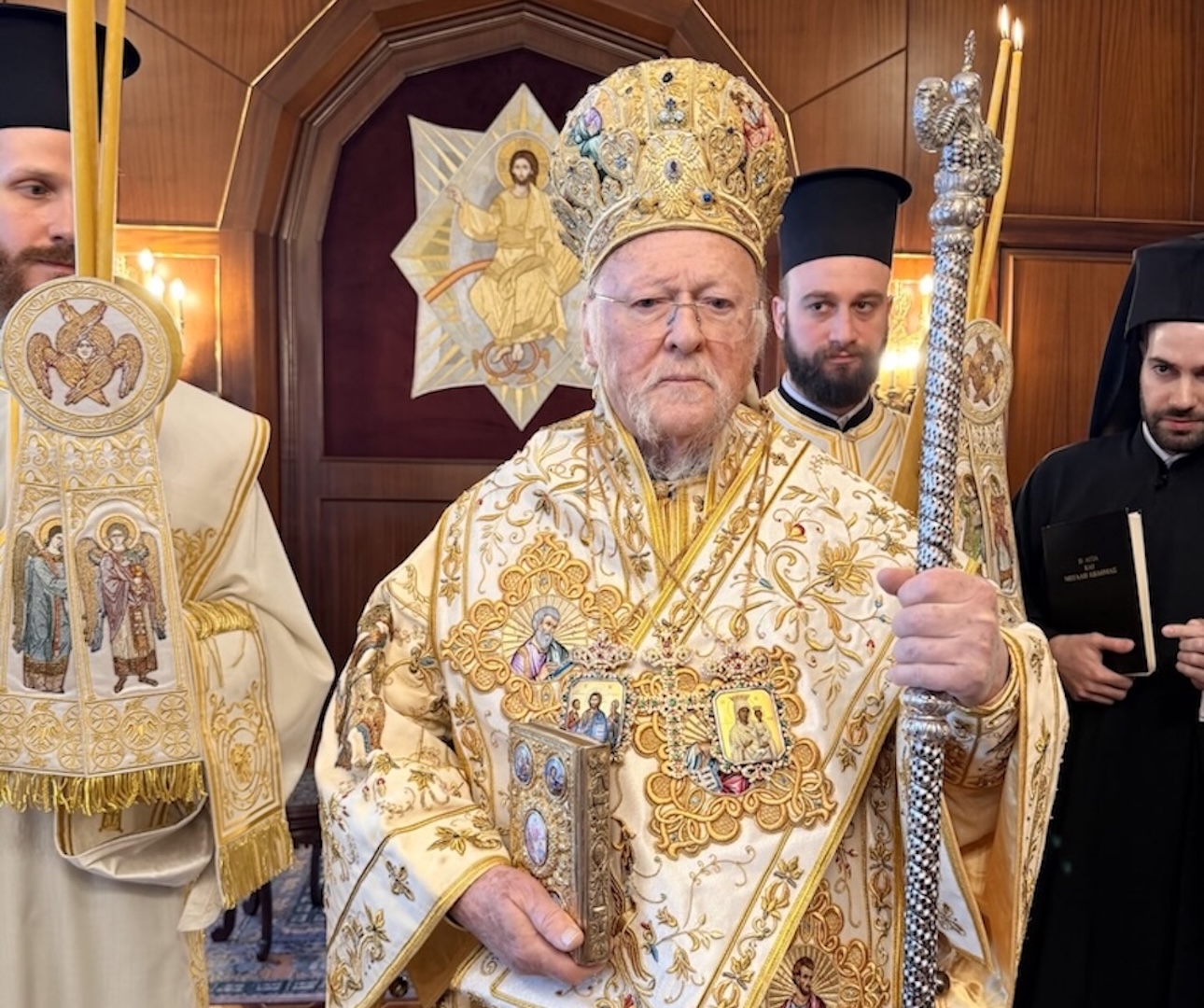
We say that the Ecumenical Patriarch is equal to the other bishops because he himself is a bishop, a successor to the Apostles in the service and government of the Church. His All-Holiness the Ecumenical Patriarch is equal to the other bishops in possessing those spiritual gifts (charisms) and sacred responsibilities that are unique to the episcopate: the ability to ordain other bishops, priests and deacons, and the responsibility to oversee the area under his jurisdiction, and to ensure that the Gospel is faithfully proclaimed there.
At the same time, the Ecumenical Patriarch is first among these bishops. His full title is “Archbishop of Constantinople-New Rome and Ecumenical Patriarch.” Bishops of large cities often have responsibility for the areas around those cities, and are given the title of Archbishop. Those who have the responsibility to oversee vast regions, encompassing entire nations or even larger expanses, are known as Patriarchs. In the early centuries of the Church, there emerged five Patriarchs, in Rome, Constantinople, Alexandria, Antioch, and Jerusalem. Others, notably the Patriarch of Moscow, arose later in the life of the Church. After the Great Schism between the Churches of Rome and Constantinople in 1054, the Church of Constantinople became the First See (area of a bishop’s jurisdiction) of the Orthodox Church.
The foundational canonical order of the Church, based on the Ecumenical Councils, grants to the Church of Constantinople the sacred responsibility to adjudicate disagreements between Churches. This responsibility stems from Canon 9 of the Fourth Ecumenical Council, which was held in Chalcedon in 451: “If a bishop or cleric has a disagreement with the metropolitan of the province, let him appeal to the Exarch of the Metropolis, or to the throne of the Imperial City of Constantinople, and let him be tried there.”
This is the fullest indication of what it means for the Ecumenical Patriarch to be “first among equals.” As bishops, all members of the episcopate are equal, but if there are disagreements among bishops or between Churches, the Church of Constantinople has the sacred responsibility to settle them.
Emanating from this authority to deal with disagreements among bishops, the Ecumenical Patriarchate has the sole authority to convene the Holy Synod, as it is made up of bishops from around the world and is intended to settle issues that may be in dispute. The Ecumenical Patriarch, because he has this universal authority encompassing the entire Church (hence the title “Ecumenical Patriarch,” which originated in the sixth century), also has the responsibility to grant autocephaly (independence) to regions that were previously part of other ecclesiastical jurisdictions.
In modern times, the Ecumenical Patriarchate has granted autocephaly to the Churches of Serbia (1920), Romania (1925), Bulgaria (1961), Georgia (1990), Greece (1850), Poland (1924), Albania (1937), and the Czech Lands and Slovakia (1998). Most recently, His All-Holiness Ecumenical Patriarch Bartholomew granted autocephaly to the Orthodox Church in Ukraine in January 2019.
The Ecumenical Patriarchate granted autocephaly to the Church of Russia in 1589, when the Patriarchate of Moscow was first established, over a thousand years after the Council of Chalcedon granted to the Church of Constantinople the responsibility to resolve ecclesiastical disputes.
It is important to understand, however, that these special responsibilities of the Ecumenical Patriarchate do not establish the Ecumenical Patriarch as an “Orthodox Pope.” There is and can be no “Orthodox Pope”; the authority of the Ecumenical Patriarch within the Orthodox Church is immensely different from the Roman Catholic Church’s understanding of the authority of the Pope of Rome.
The Roman Catholic Church teaches that “the Roman Church possesses a pre-eminence of ordinary power over every other Church, and that this jurisdictional power of the Roman Pontiff is both episcopal and immediate.” (First Vatican Council, Pastor Aeternus, 3.2) This means that in the Roman Catholic Church, the Pope of Rome has direct authority over every other bishop, and jurisdiction over every other bishop, as well as all the faithful.
The Ecumenical Patriarch, by contrast, does not have immediate or jurisdictional authority over Patriarchs and bishops who are not within his canonical territory. He has no authority that the other Patriarchs and bishops do not have except the responsibility to act as a court of appeal and settle disputes between the Churches.
The Roman Catholic Church also holds that the Pope is infallible, that is, protected by God from error, when he states that something is a part of the Christian Faith, that all the faithful must believe. The Ecumenical Patriarch does not claim infallibility; as Orthodox Christians, we believe that Almighty God protects His Holy Church from error within the teachings of the Ecumenical Councils only.
And so when the Orthodox Church teaches that the Ecumenical Patriarch is “first among equals,” it is recognizing that he is one among many brother bishops, not a super-bishop whose authority transcends those of them all. This Orthodox view of the Ecumenical Patriarchate, and of the episcopacy in general, is faithful to the canonical order of the Church in the first millennium, before the schism with the Church of Rome.
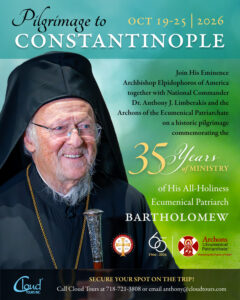
Above all, we join His All-Holiness Ecumenical Patriarch Bartholomew in unceasing prayer for a transformative resolution of differences and the definitive restoration in Christ of unity in the One, Holy, Catholic and Apostolic Faith.