Dear Brother Archons and Friends of the Archons of the Ecumenical Patriarchate,
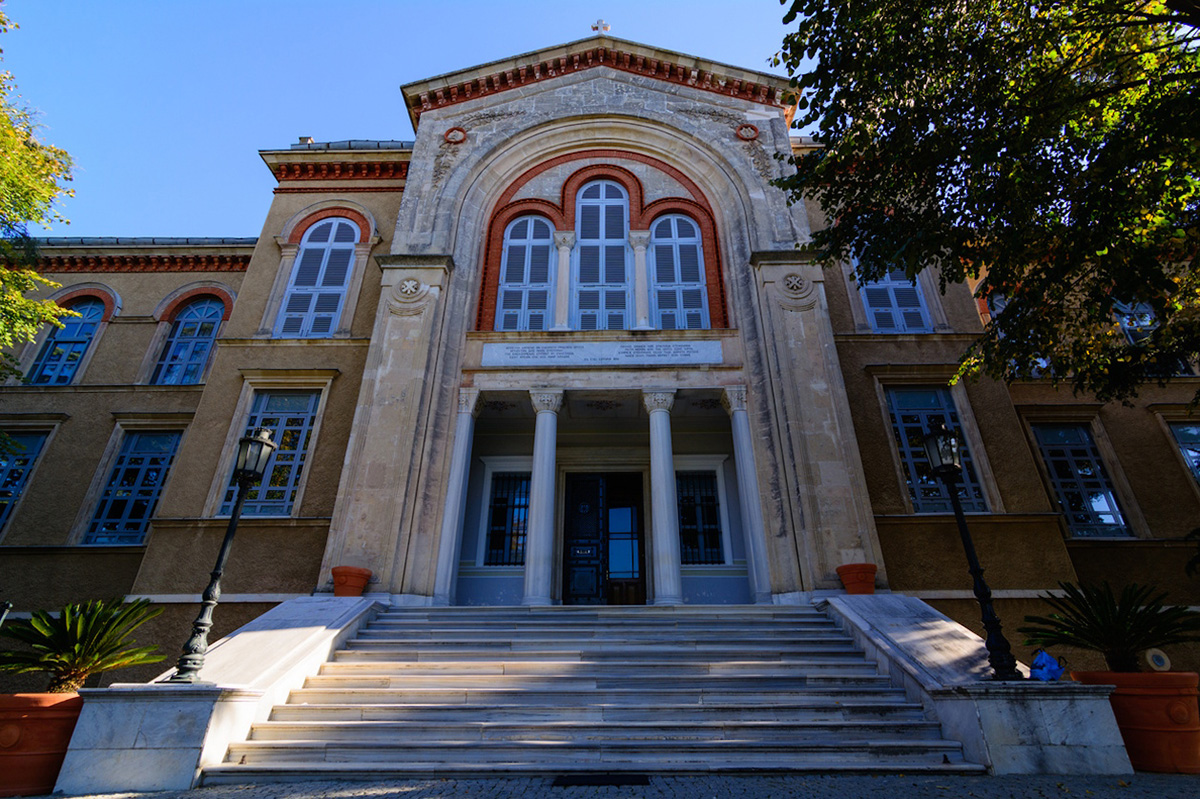
In this extraordinary article in Public Orthodoxy, Professor Elizabeth Prodromou, Professor of the International Studies Program at Boston College, a Non-Resident Senior Fellow of the Atlantic Council’s Eurasia Center, and Vice Chair of the Archon Women in Orthodoxy Diakonia Ministry, and Fr. Milan Sturgis provide a uniquely perceptive and comprehensive explanation of the situation of the Theological School of Halki, forcibly closed by the Turkish government since 1971, and the prospects for its reopening.
To understand why it is so important that the Halki Seminary reopen, and what interests the Turkish government has in keeping it closed, as well as the role that the U.S. government can play in ensuring that its reopening is genuine, and not simply a Turkish government half-measure or deception, read and reread this article. Dr. Prodromou and Fr. Sturgis also explain why the reopening of Halki is a fundamental issue of religious freedom, which makes it a central concern for the Archons of the Ecumenical Patriarchate in our mission to protect and defend religious freedom worldwide.
Heartfelt thanks to Dr. Prodromou and Fr. Sturgis for providing us with these remarkable insights.
Yours in the service of the Ecumenical Patriarchate,
Dr. Anthony J. Limberakis
The Archon Grand Aktouarios
National Commander

Halki’s Reopening: US Religious Freedom Policy Can Remedy Turkey’s Potemkin Performance
Heritage Under Siege
The Ecumenical Patriarchate of Constantinople’s Theological School of Halki has been shuttered for fifty-five years—closed by laws of successive, military and civilian, governments of the Republic of Turkey law. The Halki case has long been overlooked in international media—after all, the school’s closure doesn’t meet the cynical media adage of “if it bleeds, it leads”—and the lack of media spotlight has been matched by the failure of US foreign policymakers to address what’s at stake in the Halki case. Halki’s half-century closure illustrates how states deliberately use legislation and administrative control to erode a vulnerable community’s living presence and erase its historical memory. For US foreign policymakers struggling to maintain credibility in putatively supporting a rules-based international order that includes robust protections of international religious freedom, Halki is a critical test case of whether rule-of-law commitments retain practical meaning in an increasingly Hobbesian international order.
Threats to the survival of vulnerable faith communities, in this instance, the Ecumenical Patriarchate and the Greek Orthodox community of Turkey, do not emerge only from conditions of armed conflict that target tangible and intangible religio-cultural heritage—the more familiar object of attention from policymakers and media. The closure of Halki underscores that laws can be just as lethal as drones and missiles when it comes to heritage destruction. Indeed, the Halki case stands as evidence of the pernicious effects of weaponizing law to perpetrate violations of international religious freedom and destruction of religio-cultural heritage.
Halki’s free operation as an educational institution of the Ecumenical Patriarchate of Constantinople was an immediate casualty of the 1971 military coup in Turkey. Subsequent changes to laws regulating higher education—following from the 1971 coup and expanding in the aftermath of yet another military coup,in 1981—shut down Halki and straightjacketed its reopening, all according to the Turkish military’s logic of preserving Kemalist secularism as a sine qua non for national identity. Initially, Halki’s closure was justified by placing all private higher education institutions under direct control of the Turkish state; that limitation was expanded with laws banning independent religious institutions, which were required to be controlled by state universities in Turkey. The formal and informal adjustments to those laws have allowed schools and faculties of Islamic theology at multiple levels to flourish in Turkey, but Halki’s closure has been a constant in the reconfiguration of the country’s religio-political landscape. Whether self-styled Kemalists or, in the past 25 years, openly Islamist, every Turkish administration has rejected the reopening of Halki as an independent educational institution functioning, according to international legal requirements, under the independent control of the Ecumenical Patriarchate.