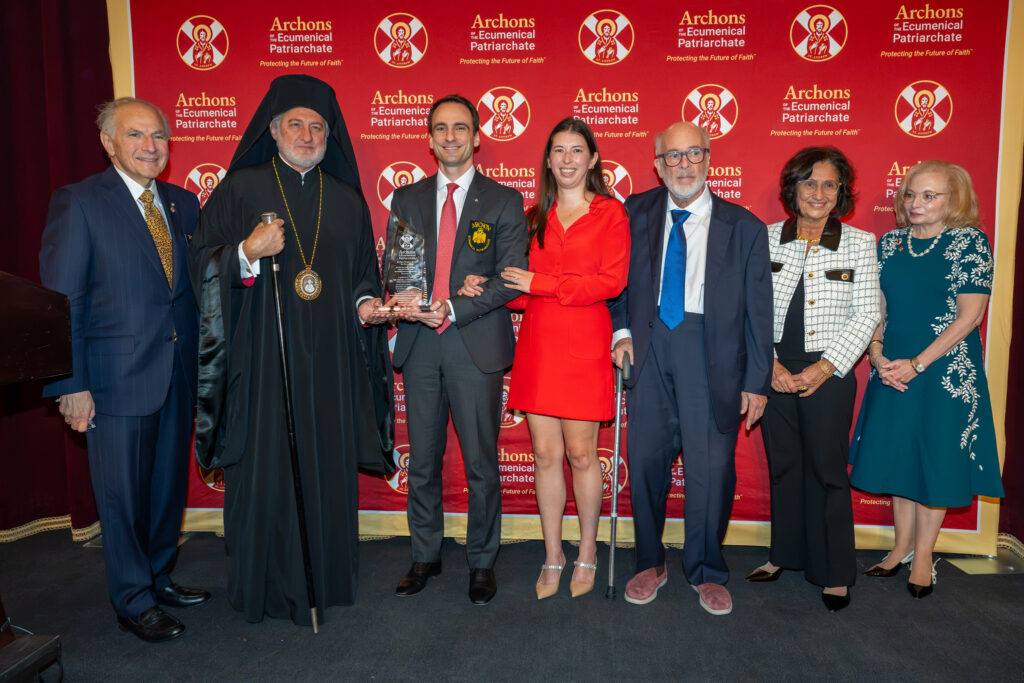
Archon Sophia Award for Excellence Acceptance Remarks
Michael J. Kratsios
October 17, 2026
As prepared for delivery
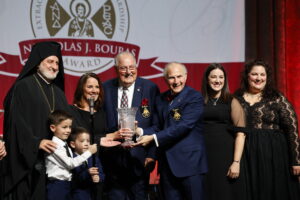
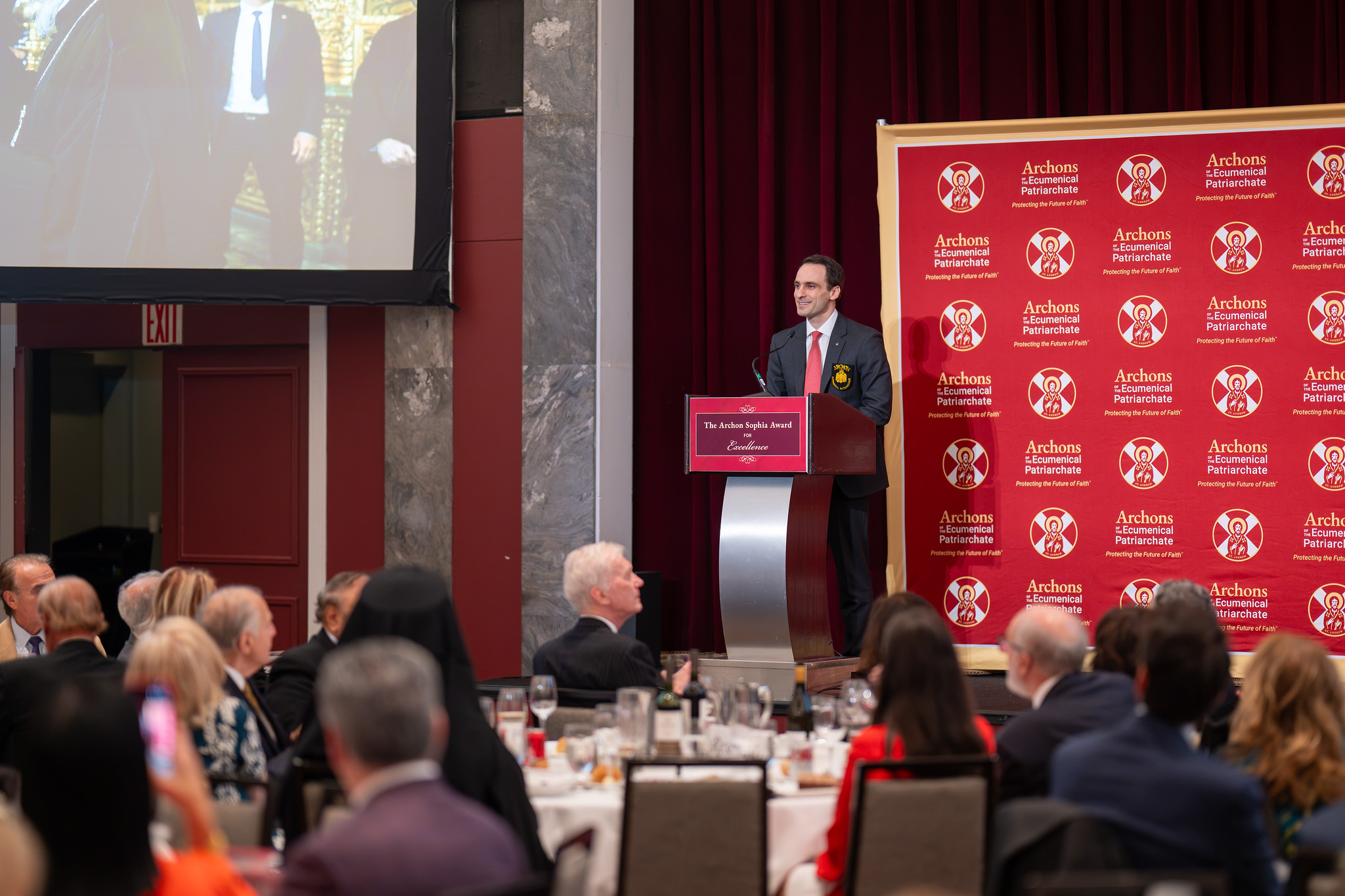
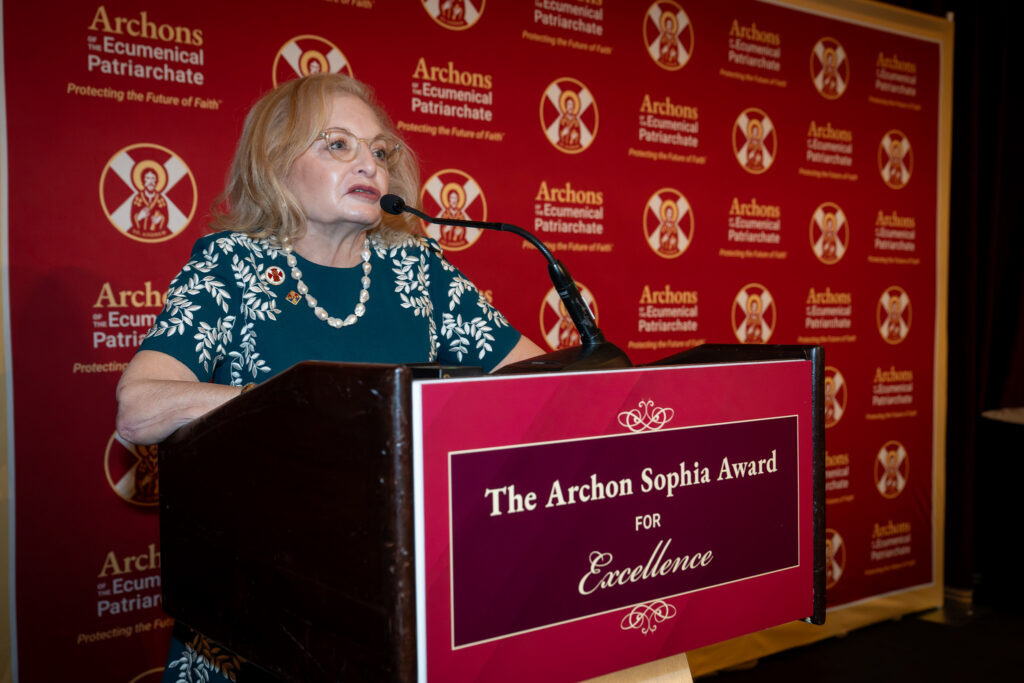
Thank you, Dr. Limberakis, for that generous introduction. Your Eminence, fellow Archons, distinguished guests, and friends, it is a great honor to receive the Archon Sophia Award.
Preparing for this weekend, I have been thinking about Sophia, as we all know the Greek word for wisdom, and what it truly means. At first, I thought about knowledge. But everyone who works at the frontier of knowledge eventually reaches the edge of it. Most of us treat that edge as a wall. But in the Orthodox Church, that edge is a mysterio, a mystery, and we know, that it is a door. I watch my infant son walk through that door every morning without even noticing, because he lives where it opens: in the present.
So when I reflect on Sophia, I think not of static knowledge, but of three dynamic gifts: mystery, innocence, and awe.
First, I want to talk about Sophia as mystery. I serve as the President’s science and technology advisor, leading the White House Office of Science and Technology Policy. My job is to help America lead in super intelligence, quantum computing, nuclear energy, biotechnology, and space. I spend my days at the frontier of human knowledge.
Knowledge grows every day. Everything we discover at the frontier, we can study, understand, and put to use.
Mystery is the opposite. It is not simply something we haven’t figured out yet. It lies beyond the place where the mind can make sense of things. And we meet it every Sunday. No one understands the Liturgy merely by studying it. The incense, the icons, the chanting, Theia Koinonia – we are simply there, with everything we are.
That is why we do not go to church to understand. We go to meet God, and most of that meeting has nothing to do with understanding.
As the Apostle Paul tells the Corinthians, Christ is “the power of God and the wisdom of God,” and this wisdom is spoken “in a mystery.” So Sophia is not something we possess. It is someone we follow.
The second dimension of wisdom is innocence, and no one has taught me more about simply being present than my fifteen-month-old son, Odysseus. Odysseus feels everything, because he is nowhere but here. That is the innate wisdom of innocence.
We named our son Odysseus, after the man who spent ten years trying to get home. Homer’s Odysseus was the cleverest man in Greece, but cleverness alone did not bring him home. It took ten years, the loss of everything he relied on, and a deep lesson in humility. In our Orthodox faith, we are all on that same spiritual journey home, and our true Ithaca is God.
Odysseus will grow up in a world where answers are instant, where every fact is a moment away, and where machines will write, calculate, and imagine alongside him. I want many things for him. But I won’t pray that he knows more than I do, which he surely will. I will pray that he be wise: that he will know what to do with all he knows, and Whom to follow.
This past July, my wife Alissa and I brought Odysseus to the Phanar to be baptized. It was one of the most meaningful days of my life. The most special part of it was the audience we were blessed to have with His All-Holiness. For the nearly two hours we were with him, he turned his entire attention to Odysseus, and they played. At one point, Ody was playing with the Patriarch’s staff, and His All-Holiness delighted in it. The Patriarch understands that play is not a pause in the work of holiness. It is one of its purest forms. A heart that lives in the present always has time for joy. That is the wisdom of innocence, and it is the greatest gift my son has given me.
The third manifestation of wisdom for me is awe. My son has an endless capacity for wonder. He is captivated by a spoon. He is transfixed by a Costco delivery box. He finds the extraordinary in the ordinary.
As adults, we can easily lose that childlike wonder, until something forces us to pause. For me, I feel that same profound awe, and indeed my faith, most deeply when I am in Hagia Sophia, gazing up at its remarkable dome. Its builders, Anthemios and Isidorus, a mathematician and a geometer, were among the finest minds of their age. I work among the technologists of our own age, and they are building tools more powerful than anything Anthemios and Isidorus could have imagined. But those two ancient builders used their knowledge to create a space where the very first thing you do is look up. They built with the head, for the heart.
My prayer for Ody, for myself, and for all of us is that the more we know, the more we wonder, and that we never stop looking up.
May we embrace the mystery that leads us to God, hold fast to the innocence that keeps our hearts open, and live in the awe that lifts our eyes above the horizon. That is the true gift of Sophia.
Thank you to His All-Holiness the Ecumenical Patriarch and to His Eminence Archbishop Elpidophoros, for the example of your faith and service. Thank you to the National Commander and the National Council, and to all the Archons, for everything you do for the Mother Church. Thank you to my parents, John and Maria, who raised me in the Church. And to my wife Alissa, and to Ody, who is teaching me every day.
It is a great honor. Thank you.