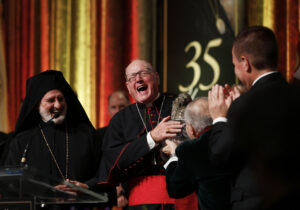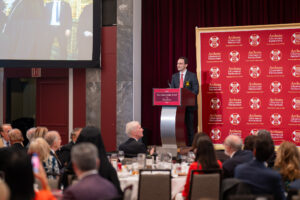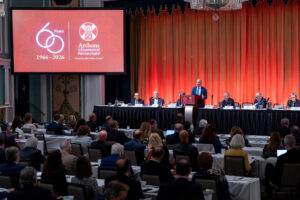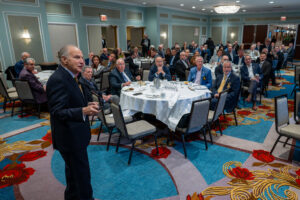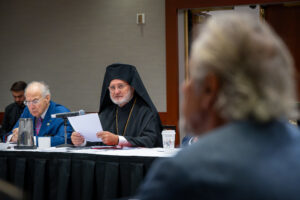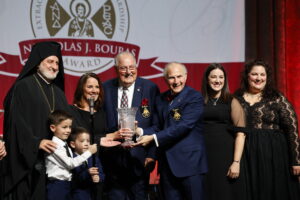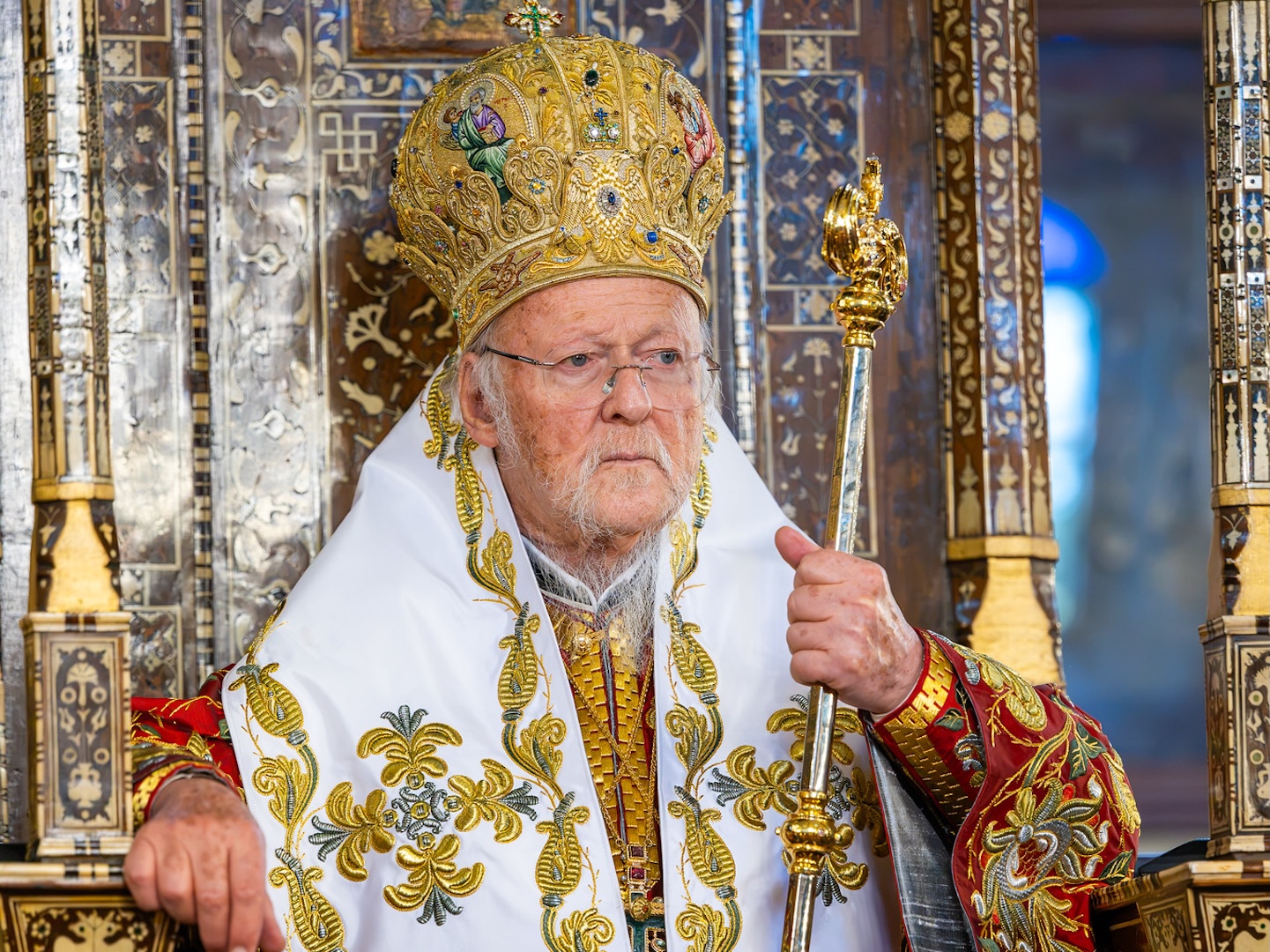
On Wednesday, October 21, 2026, hierarchs, clergy, Archons, dignitaries and guests from around the world attended a banquet in Constantinople honoring the 35th anniversary of the enthronement of His All-Holiness Ecumenical Patriarch Bartholomew as Archbishop of Constantinople-New Rome and Ecumenical Patriarch. His All-Holiness is the longest-serving and one of the most consequential Ecumenical Patriarchs in the entire 2,000-year history of the Church.
In his remarks on this unique and extraordinary occasion, His All-Holiness recounted how God had guided him throughout his life, stating that “for us, this evening’s gathering is an occasion for glorification, thanksgiving, and remembrance. We glorify the Triune God for the countless and invaluable blessings bestowed upon us through His inscrutable providence, unfathomable goodness, and incomprehensible care.” His All-Holiness then proceeded to recount some of the remarkable blessings he had received.
“We owe a great deal,” His All-Holiness said, “to our birthplace, rugged Imbros, the island that gave us life and shaped our beginnings. We remember all those to whom, after God, we owe everything: life itself and the means to live it well; our love for the Church and learning; our reverence for God; and our journey towards the priesthood.” He noted one person in particular through whom he received many blessings from Almighty God: “Among the many to whom we owe a debt of gratitude, we remember in particular our late spiritual father and benefactor, Metropolitan Meliton of Chalcedon, that emblematic figure of the Great Church and of the Christian world.”
His All-Holiness continued his reminiscences by discussing his theological formation: “Our theological identity was forged through our years of study at the Theological School of Halki and enriched by our subsequent studies in the West. By divine favor, we were granted the privilege of serving at the Phanar from 1972 onwards, for a full fifty-four years, and, since 1991, as Ecumenical Patriarch.”
With profound and moving gratitude, the Ecumenical Patriarch continued: “We owe much to our brother Hierarchs, who have shared our struggles and stood courageously alongside us in the service of the Church, as well as to the beloved members of the Greek community here in Constantinople. In this City of Constantine, the cradle of Romiosini and the Greek Orthodox tradition, we have journeyed together through seasons of calm and times of turmoil. We have walked the streets trodden by our forebears, those who created what has been called ‘our glorious Byzantinism.’”
His All-Holiness then spoke of what he had learned during his long years of selfless service to God and His Holy Church: “Our service to the Church and our long journey through life have taught us to hold a high view of the human person and to place our trust in the power of the God-given freedom bestowed upon each of us. Wherever love, justice, and peace prevail, there God is present, inspiring and sustaining human endeavor and enabling us to become ‘God’s fellow workers.’”
In an age when many live empty, unfulfilled lives, His All-Holiness emphasized that it is in service to God that human beings find meaning and purpose: “Faith in the living God and in our eternal destiny in Him,” he explained, “gives our existence an eternal horizon. It frees us from the bonds of vanity and futility and strengthens our creative powers. ‘All things work together for good to them that love God.’” (Romans 8:28).
To live without this faith, the Ecumenical Patriarch stated, is to restrict and constrict one’s existence: “Conversely, if we regard our lives as a Sisyphean task, if we believe that our existence is merely the product of chance and consider death to be our absolute end and annihilation, we are led towards various forms of division, constricted ways of approaching life, and the relativization of all values. We become trapped in what appears to be an insurmountable atmosphere of negativity and pessimism.”
His All-Holiness then explained to those present that this view of the meaning of life had decisive and important consequences: “You will all appreciate how decisive our understanding of the meaning of life and the human person becomes in an age of artificial intelligence and the impending dominance of robotics, of the ‘posthuman’ and the principle that ‘everything is permissible,’ amid the contemporary uncertainty and ambiguity surrounding human affairs.”
Returning to the blessings he had received, His All-Holiness continued: “At moments when the whole of life seems to converge into a single point, we come to realize that what we are is not the product of our own making, but a blessing and a gift from heaven, something we owe to a power beyond ourselves.”
Accordingly, His All-Holiness said, “Day and night, I give glory to the Lord, the Giver of every good gift, for all that He has bestowed so abundantly upon His supplicant, strengthening and guiding him at every stage, in every circumstance, and in every decision throughout his life.”
His All-Holiness concluded: “The compassionate Lord of glory granted me faith as an absolute trust in His will and providence; as an openness to the world and a willingness to reach out to it; as a life of witness, communion, and dialogue; and as an encounter and peaceful coexistence with my fellow human beings.” He added: “In conclusion, we ask you to offer your prayers to the God of mercy, that He may strengthen us in the service of His Church for as long as it pleases Him.”
Eis polla eti, Despota!