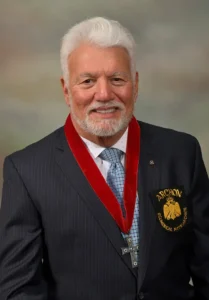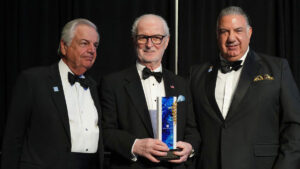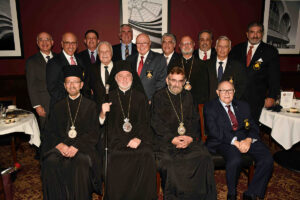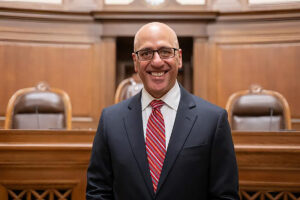

Constantinople—İznik (Nicaea), Turkey – Archon National Treasurer Peter J. Skeadas, National Secretary Gus (Kosmas) Pablecas and Sergeant-At-Arms Alexander Pritsos, traveling as an official delegation of the Order of Saint Andrew the Apostle, undertook a historic pilgrimage marking the 1700th anniversary of the Nicene Creed. Their journey brought them to the Ecumenical Patriarchate in Constantinople and to the sacred city of Nicaea, where the First (325 AD) and Seventh (787 AD) Ecumenical Councils profoundly shaped the faith, unity, and life of the worldwide Church.

A Commemoration of Unity at the Birthplace of the Creed
The delegation began its pilgrimage to Nicaea, where they stood on the very ground where the early Church Fathers first proclaimed the universal confession of faith that begins, “We believe…”
Walking upon the ancient stones of Nicaea, the Archons reflected on the enduring significance of the Creed, born amid theological controversy yet destined to anchor the unity of Christians across centuries. The visit deepened ones appreciation for the Church’s ongoing mission to preserve and proclaim the apostolic faith in a world still marked by division.
Honoring the Legacy of the Seventh Ecumenical Council
The Archons continued to the site of the Seventh Ecumenical Council, held in 787 AD, where the controversy over the veneration of holy icons was resolved and the theology of the Incarnation reaffirmed. Today a mosque, the historic church retains unmistakable spiritual resonance, echoing the courageous witness of the bishops who defended the rightful place of icons in Christian worship.
For the Archons, this visit offered a powerful reminder of the Church’s steadfast commitment to truth, beauty, and sacred tradition, even amid centuries of challenge and change.

An Extraordinary Honor: Witnessing a Meeting of Christian Leaders
During the pilgrimage, the Archons were granted the exceptional honor of attending the celebration of the Eastern Divine Liturgy at St. George Cathedral between His All-Holiness Ecumenical Patriarch Bartholomew I and His Holiness Pope Leo XIV, occurring, where ancient hymns, incense, and solemn prayer underscored the continuity of the Church through the ages.
Seeing the Ecumenical Patriarch and the Bishop of Rome together, praying side by side, offered a living, tangible sign of Christian hope and the continuing pursuit of unity first affirmed at Nicaea.
Observing Diakonia and Martyria in the Person of His All-Holiness
Throughout the visit, the Archons were profoundly moved by the diakonia (service) and martyria (witness) embodied by His All-Holiness Ecumenical Patriarch Bartholomew. His gentle humility, pastoral warmth, and unwavering dedication to the Church were evident in every gesture.
His global advocacy for ecological stewardship, human dignity, and inter-Christian dialogue continues to shine as a modern testimony to the Gospel. Standing beside Pope Leo XIV, his witness was magnified demonstrating that unity is not merely a historical aspiration but an urgent call for the present age.
A Pilgrimage That Inspires Action
As official representatives of the Order of Saint Andrew, the three Archons returned from their pilgrimage deeply inspired and renewed in purpose. The encounter with sacred history, the living ministry of the Ecumenical Patriarchate, and the hopeful signs of strengthened Christian brotherhood reinforced their mission and commitment to:
- Promote Orthodox–Catholic dialogue,
- Support the sacred mission of the Ecumenical Patriarchate, and
- Bear active witness to the unity for which Christ prayed: “That they all may be one.”
In Conclusion
The Archon delegation couldn’t help but feel a deep sadness upon entering the glorious Orthodox Cathedrals and Churches that have now been converted into mosques. The sense of repression was perceptible, yet the steadfast fortitude of the Orthodox Christians remains undiminished, sustained by the abiding truth that Christianity endures in the land of Constantinople and by the assurance that God dwells within their hearts. Moreover, the visit to the Halki Monastery and its historic School of Theology offered a profound sense of hope, reminding the delegation of the vital role it has played, and will one day play again in educating and forming priests for future generations. Its legacy stands as a beacon of renewal for our Orthodox faith and a promise of spiritual restoration.
On the Holy ground the Archons walked, stones that once held the footsteps and prayers of the early Patriarchs, clergy and the faithful Orthodox Christians, the Archons felt a reverence that words cannot hold. Despite the diminishing population of Orthodox Christians in a predominantly Muslim nation, the Archons were deeply moved by the unmistakable and enduring presence of the faith in these sacred places. The intrinsic strength of Christianity, rooted not in numbers, but in the living power of the Holy Spirit, was palpable in the air and even in the stones beneath their feet. Though the Christian community today is small, the sense of Orthodoxy remains monumental: a spiritual legacy that has shaped these lands for centuries and continues to radiate a quiet but overwhelming strength. Here, the Archons witnessed firsthand that Orthodoxy endures—then, now, and forever and without question, is the land it sits on.