The Russian Federation and the Republic of Turkey continue to attract negative attention for their treatment of religious minorities.
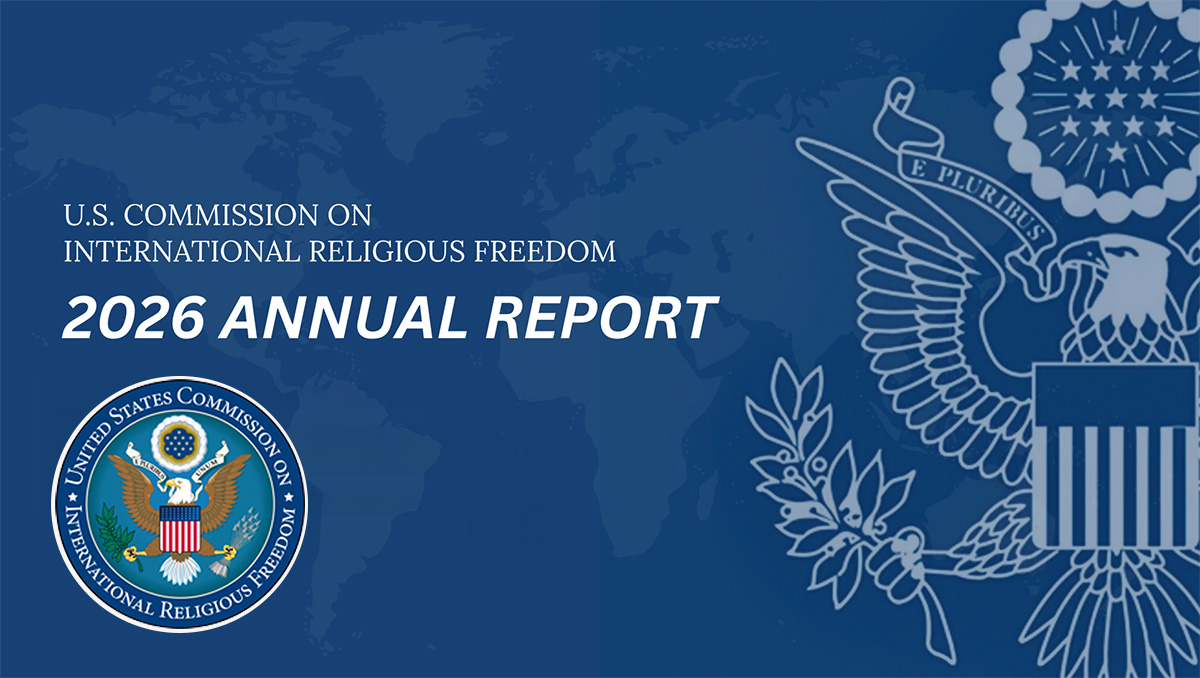
In its 2026 Annual Report, the United States Commission on International Religious Freedom (USCIRF) recommended that the U.S. government “redesignate Russia as a ‘country of particular concern,’ or CPC, for engaging in systematic, ongoing, and egregious violations of religious freedom.” USCIRF also once again recommended that Turkey be placed on the “Special Watch List for engaging in or tolerating severe violations of religious freedom pursuant to the International Religious Freedom Act (IRFA).” The 2025 Annual Report made the same recommendation.
The 2026 report noted that Russia “enforced its religiously repressive legal system on the Ukrainian territories it illegally occupies, maintaining bans on certain religious groups, imposing fines for so-called illegal missionary activities, raiding houses of worship, seizing religious properties, and detaining religious leaders and community members.”
This persecution focused in particular on the Orthodox Church of Ukraine, to which His All-Holiness Ecumenical Patriarch Bartholomew granted autocephaly in January 2019. The USCIRF report stated that “Russian de facto authorities often commit religious freedom violations to facilitate the dominance of the Russian Orthodox Church of the Moscow Patriarchate in these territories. At least 47 Christian religious leaders have been killed, and at least 700 houses of worship and other religious sites—mostly Christian—have been damaged or destroyed since Russia’s February 2022 invasion.”
The USCIRF report also showed that in some ways, conditions for Christians and other religious minorities in Turkey are growing progressively worse. The 2025 report had stated that in Turkey, “some foreign national clergy experienced delays or obstructions in renewing their residency permits. This further constrained the Eastern Orthodox Church, which has been unable to domestically train clergy since 1971, when a constitutional court ruling in effect pressured some private religious colleges to close—including the Halki Theological School.” The 2026 report noted that “the government reportedly intensified a multiple-year campaign invoking spurious national security concerns to cut off the legal residency status of at least 375 foreign national Christian clergy, their family members, and other religious workers, to date.”
These restrictions on foreign clergy, coupled with the continuing forcible closure of the Theological School of Halki, could potentially asphyxiate the Ecumenical Patriarchate altogether, as it would be impossible either to train native clergy or to welcome clergy from abroad.
Since 2017, USCIRF has repeatedly and consistently recommended that Russia be designated as a Country of Particular Concern. The U.S. State Department officially designated Russia as a CPC beginning in 2021.
USCIRF first added Turkey to its Watch List in 2009 as requiring “close monitoring due to the nature and extent of violations of religious freedom.” In 2012, USCIRF recommended that Turkey be designated a “Country of Particular Concern” (CPC), that is, as one of the principal violators of religious freedom worldwide, a country in which such violations are “systematic, ongoing, and egregious.”
In 2014, USCIRF returned Turkey to the Special Watch List, where it remained until 2021. In the 2022 report, USCIRF once again recommended that the U.S. government return Turkey on Watch List for continuing to engage in severe violations of religious freedom pursuant to the International Religious Freedom Act (IRFA). Turkey was once again recommended for the Special Watch List in 2024.
Read the 2026 USCIRF Annual Report here. The section on Russia begins on page 42. The section on Turkey begins on page 74.