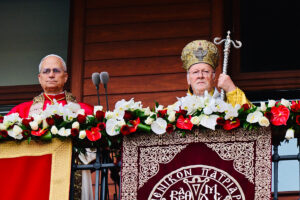
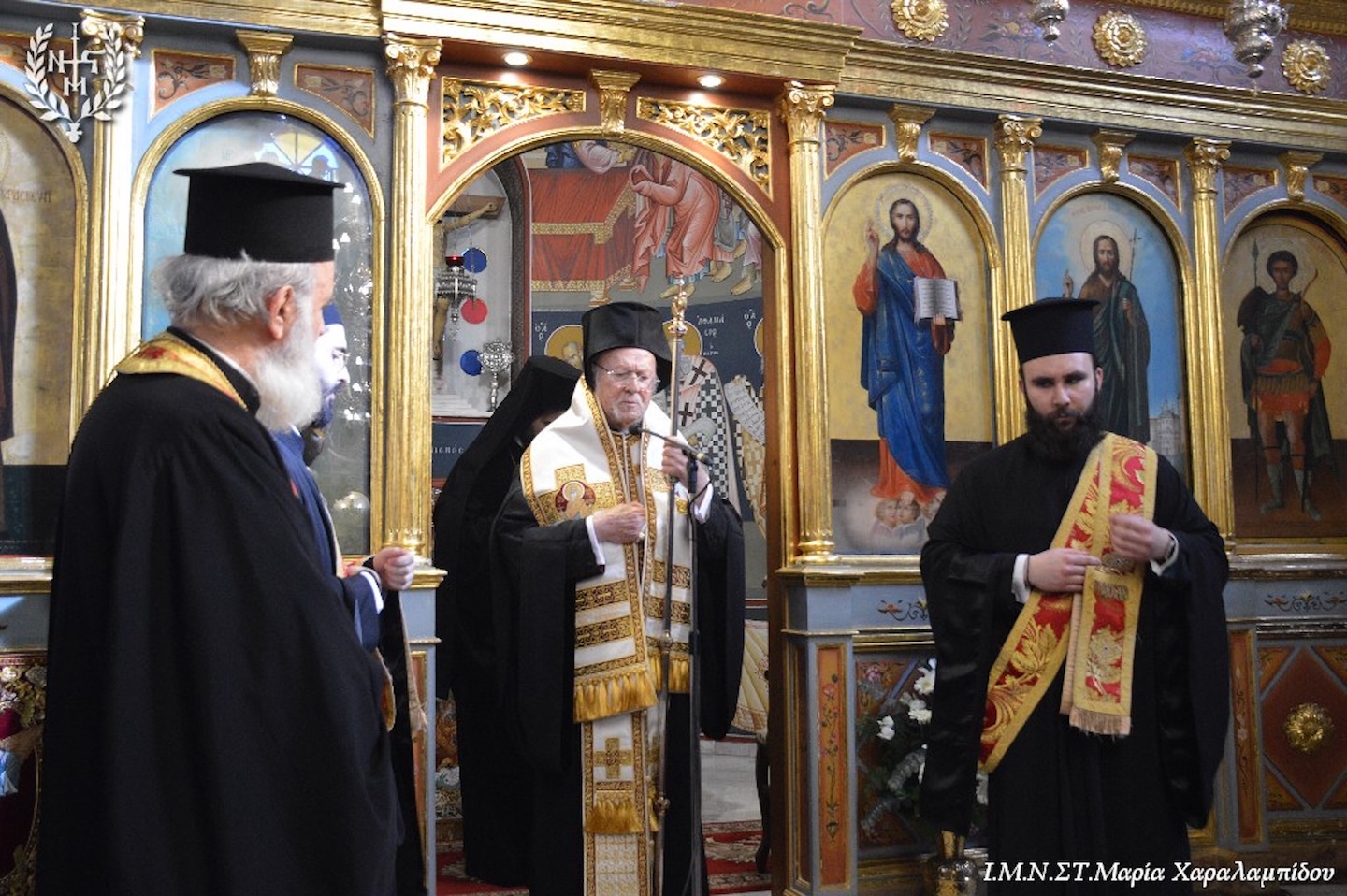
As the Triodion began on February 1, 2026, the Sunday of the Publican and the Pharisee, His All-Holiness Ecumenical Patriarch Bartholomew emphasized that the Church “does not merely live from the past, but is inspired by it and bears witness to the Light of Christ — a Light that reveals the past, illumines the present, and guides the future.” He stated: “Here is the first teaching of the Holy Triodion: not fasting alone, not achievements alone, but humility. Fasting without repentance becomes Pharisaism… Humility is grace, it is wisdom, it is strength, it is peace.”
In his March 1, 2025 Catechetical Homily for the Opening of Holy and Great Lent, His All-Holiness offered further insights into the importance of Holy and Great Lent, referring to it as “the blessed period of fasting and repentance, of spiritual vigilance and journey with the Lord, as He comes to His voluntary passion, in order to reach the veneration of His splendid Resurrection and become worthy of our own passage from earthly things to ‘that which no eyes have seen and no ears have heard and no human heart has ascended’ (1 Cor. 2.9).”
To those who need to renew their commitment to the Faith, Holy and Great Lent offers an opportunity: “In the early Church, Holy and Great Lent was a period of preparation of catechumens, whose baptism took place during the Divine Liturgy of the Paschal Feast. This connection with baptism is also preserved by the comprehension and experience of Great Lent as the period par excellence of repentance that is described as ‘a renewal of baptism,’ ‘a second baptism,’ ‘a contract with God for a second life,’ in other words, a regeneration of the gifts of baptism and promise to God for the beginning of a new way of life.”
His All-Holiness noted that for all believers, Holy and Great Lent provides “an opportunity to become conscious of the depth and wealth of our faith as ‘a personal encounter with Christ.’” He stated that “our experience of faith is ‘unique’ and ‘profoundly personal’ as a freedom given to us by Christ, as something that is at the same time ‘essentially ecclesiastical,’ an experience ‘of common freedom.’”
Thus while “this most genuine freedom in Christ is expressed as love and applied support to our concrete neighbor, as this is described in the Parable of the Good Samaritan (Luke 10.30–37) and in the passage about the Last Judgment (Mt. 25.31–46), but also as respect and concern for the world and the eucharistic approach to creation,” so also “freedom in Christ has a personal and holistic nature, which is especially revealed during Holy and Great Lent in its understanding of asceticism and fasting.”
Regarding the Great Fast, His All-Holiness warned against a legalistic spirit regarding ascetic exercises, explaining that “Christian freedom, as existential authenticity and fullness, does not involve a gloomy asceticism, a life without grace and joy, ‘as if Christ never came.’” He emphasized that fasting is “not only ‘abstinence from food,’ but ‘renunciation of sin,’ a struggle against egotism, a loving departure from the self to the brother in need, ‘a heart that burns for the sake of all creation.’”
His All-Holiness quoted the words of Metropolitan Meliton of Chalcedon of blessed memory: “As we enter Holy Lent, what awaits us at the end is vision, miracle, and the experience of the Resurrection, the foremost experience of the Orthodox Church. Let us proceed toward this vision and experience but not without having received and offered forgiveness, not with a fast purely from meat and oil, not with a sense of hypocrisy, but with divine freedom, in spirit and truth, in the spirit of truth, in the truth of the spirit.”
In his 2024 Catechetical Homily marking the beginning of Holy and Great Lent, His All-Holiness observed that “we have already learned much from the impasse and self-righteous arrogance of the Pharisee, from the barren moralism and hard-heartedness of the elder son in the Parable of the Prodigal Son.” Let us hold fast to our Holy Faith and redouble our efforts to put His All-Holiness’ wisdom regarding Holy and Great Lent into practice. Only by doing so will we avoid these pitfalls that await those who do not embrace the humility that the Ecumenical Patriarch has termed grace, wisdom, strength, and peace.